

You might think weight loss is just a simple math problem, calories in versus calories out, that you can solve with enough discipline. It’s a common idea that if you just had more “grit,” the scale would finally move. But science suggests that for many, the struggle isn’t about willpower. It’s actually a physiological fight against the hormones that dictate how much you eat and how much you burn. For someone struggling with obesity, the biological drive to consume calories can feel like an unstoppable tidal wave, making the act of “just eating less” a battle against their own neurochemistry.
GLP-1 medications are changing the conversation by targeting the biological drivers of hunger instead of just the mental struggle of dieting. These drugs mimic a natural hormone in your body to help manage blood sugar and control fullness, effectively turning down the volume on that constant mental chatter about food. This phenomenon, often referred to by patients as “food noise,” is the intrusive, persistent preoccupation with the next meal, the next snack, or the specific craving for high-calorie foods that can occupy a significant portion of a person’s cognitive bandwidth.
The Mechanics of Satiety and the Brain
To understand why these drugs feel different from a standard diet, you have to look at how they work in your system. GLP-1 agonists mimic a hormone called glucagon-like peptide 1. Your gut naturally produces this when you eat to signal to your brain that you are satisfied. The problem is that for many people dealing with obesity, this signaling system is broken or muted. Instead of receiving a clear “stop” signal from the gut to the brain, the feedback loop is dampened, leaving the individual in a state of perpetual hunger even after consuming significant calories.
When you take a medication like semaglutide, it targets specific organs and parts of the brain to mimic that signal. Semaglutide (Wegovy mimics a hormone, glucagon-like peptide 1 or GLP-1, which helps regulate how your body processes sugar and how much hunger you feel. It essentially tells your brain, “We have enough energy, you can stop thinking about food now.” This occurs primarily in the hypothalamus, the region of the brain responsible for regulating hunger, satiety, and energy expenditure.
These medications also affect how fast food leaves your stomach. They slow down digestion through a process called delayed gastric emptying. Because the stomach remains distended with food for a longer duration, the mechanical signals of fullness are sent to the brain more consistently. This biological delay is why the “food noise”—that intrusive, constant thought about your next snack, often vanishes for patients on these regimens. Rather than fighting the urge to eat, patients often report that the urge simply ceases to exist.
It isn’t just a feeling of fullness; it’s a systemic shift in metabolic signaling. By slowing gastric emptying, the medication ensures nutrients enter the bloodstream more gradually. This prevents the massive insulin spikes and subsequent crashes that often lead to intense sugar cravings and afternoon energy dips. When blood glucose remains stable, the brain doesn’t receive the “emergency” signal that typically triggers a craving for quick-access energy, like simple carbohydrates or sugars.
Navigating the Pharmacological Options
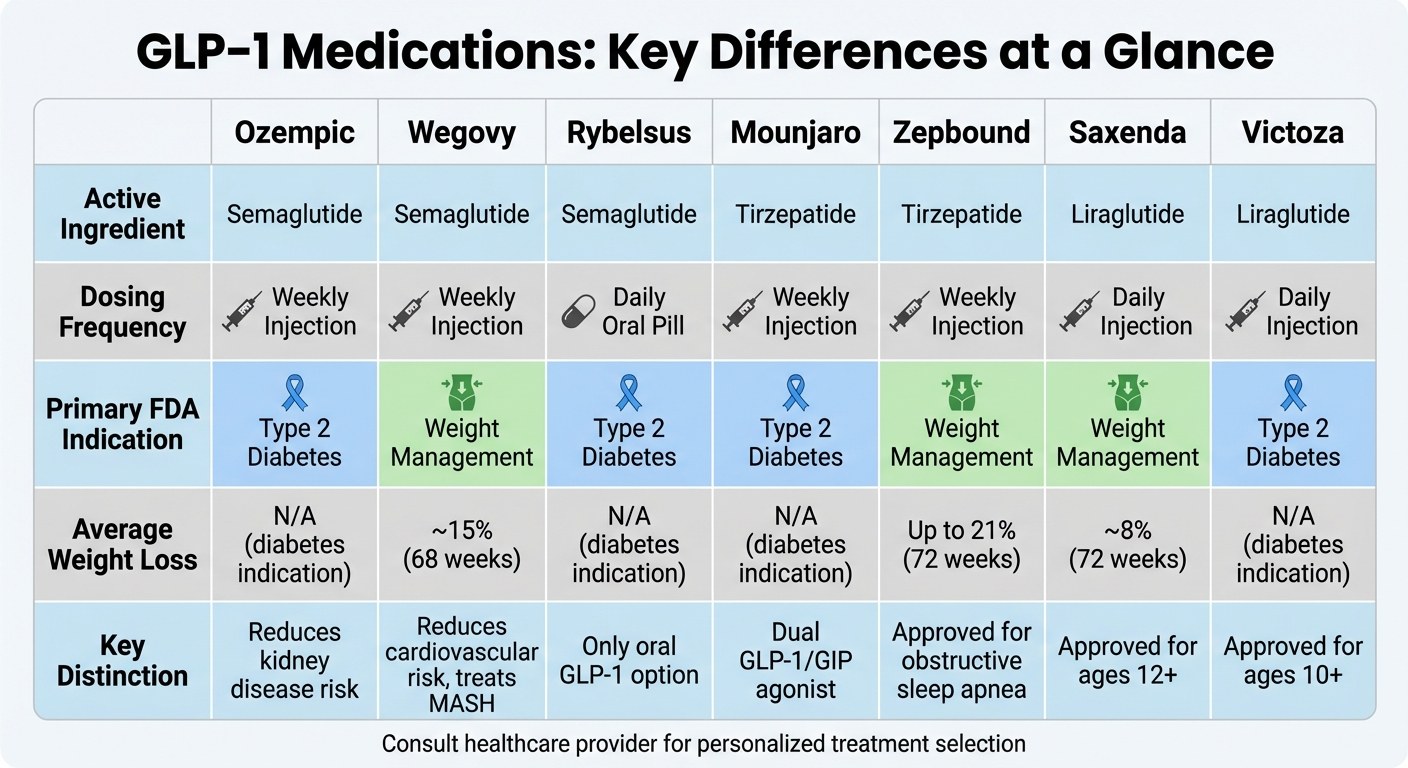
If you start looking into these options, you’ll quickly see that not all GLP-1s are the same. They are often lumped together in headlines, but their intended uses and delivery methods vary. For instance, the distinction between diabetes medication and weight management medication is a major point of confusion for people seeking medical guidance. Understanding the specific chemical structure and the FDA-approved indication of each drug is essential for managing expectations and insurance claims.
Take the relationship between Ozempic and Wegovy. They both contain semaglutide, but their regulatory paths are different. Ozempic® is FDA-approved for type 2 diabetes, whereas Wegovy® is specifically FDA-approved for chronic weight management. This distinction matters for insurance coverage, clinical trial data, and how a doctor might approach your prescription. While the active ingredient may be the same, the dosing schedules and the clinical evidence supporting their use for weight reduction versus glycemic control differ.
The market is currently crowded with different names and delivery systems. You might encounter these common variations:
- Wegovy: The semaglutide specifically for weight management, often prescribed in higher doses specifically for obesity treatment.
- Ozempic: Primarily for type 2 diabetes, but often used off-label for weight by clinicians and patients.
- Saxenda: An older, daily injectable option that requires more frequent administration than the newer once-weekly options.
- Zepbound/Mounjaro: Newer medications that target both GLP-1 and GIP (glucose-dependent insulinotropic polypeptide) hormones, potentially offering a “dual” mechanism of action.
- Rybelsus: An oral version of semaglutide (a pill rather than a shot) designed for those who prefer to avoid needles.
When you consult with a provider at a pharmacy like Schiller-Apotheke, you’ll find that the “best” drug depends on your specific metabolic profile and how your body responds to different dosages. Some people prefer the convenience of a pill, while others find the once-weekly injection much easier to manage. Doctors may also consider your history of gastrointestinal issues, your history of pancreatitis, or your specific insulin resistance levels when choosing a regimen. It really comes down to your lifestyle and your biology.
Are you prepared for the reality that these medications are often intended for long-term use rather than as a quick fix? Many people only realize this after they’ve already started the journey. Because these drugs address the underlying biological drivers of obesity, stopping them abruptly can lead to a return of hunger signals and subsequent weight regain, a phenomenon often called “rebound weight gain.”
Managing Side Effects and Expectations
While the benefits can be transformative, the transition to a GLP-1 regimen is not without physiological challenges. Because these drugs fundamentally alter how your digestive system operates, the body often needs time to acclimate to the new metabolic baseline. Managing these side effects is a critical part of the medical journey and often requires a “start low and go slow” approach to dosing.
Common side effects frequently reported by patients include:
- Nausea: Often most prevalent during the first few days after an injection or during a dose increase.
- Delayed Gastric Emptying Effects: This can manifest as indigestion, bloating, or a feeling of “fullness” even when you haven’t eaten much.
- Gastrointestinal Upset: Constipation or diarrhea are common as the gut microbiome and motility adjust to the medication.
- Reduced Interest in Food: While often the goal, a sudden lack of interest in eating can sometimes lead to insufficient caloric intake, making it vital to focus on nutrient density.
To mitigate these effects, medical professionals often recommend eating smaller, more frequent meals, staying hydrated with electrolytes, and avoiding highly processed, greasy foods that are harder for a slow-moving stomach to process. Success on these medications is rarely about “eating nothing”; it is about learning to fuel a body that is finally listening to its own satiety signals.
Economic Realities and Accessibility
The science is moving faster than insurance companies and supply chains can keep up. While the efficacy of these drugs is well-documented, the cost remains a massive barrier for the average person. We are seeing a strange split in the market: high-priced brand-name prescriptions on one side and a desperate search for alternatives on the other. This economic gap creates significant disparities in who can access these life-changing metabolic tools.
Some people look for “the poor man’s Ozempic,” which usually refers to compounded versions of these medications. These are often much cheaper but come with significant regulatory and quality-control questions. Because demand for brand-name Wegovy and Ozempic is so high, pharmacies often run into shortages, leading to a chaotic secondary market of compounded alternatives. While compounding is a legitimate practice for certain medications, the lack of FDA oversight on the manufacturing processes of some compounded weight-loss drugs has raised concerns regarding ingredient purity and potency.
We are also seeing a shift in how people try to manage costs. There are discussions about subscription models or bulk-buying programs, like the rumored Costco plans, as people try to make this treatment sustainable. For those without insurance coverage for weight management, the out-of-pocket cost can be astronomical, sometimes exceeding $1,000 per month. This cost barrier turns a medical necessity into a luxury good for many.
It is a complicated mess of supply and demand. A table below shows how the landscape of these medications is structured regarding their primary uses:
| Medication Class | Primary FDA Approval | Common Use Case |
| GLP-1 Agonists | Type 2 Diabetes | Blood sugar regulation |
| Weight Management GLP-1s | Chronic Obesity | Satiety and calorie reduction |
| Dual Agonists (GLP-1/GIP) | Type 2 Diabetes | Combined metabolic benefits |
The Shift in Weight Management Philosophy
The rise of these medications is forcing a massive rethink in the wellness industry. For decades, the dominant model was based on willpower, calorie counting, and restrictive dieting, think WeightWatchers or various keto protocols. But as GLP-1s enter the mainstream, the idea that obesity is purely a “lifestyle choice” is being dismantled. We are moving toward a medicalized understanding of body mass index (BMI) and metabolic health.
People using these medications often find they aren’t just losing weight; they are seeing improvements in other metabolic markers. Improved blood sugar levels, reduced blood pressure, and reduced inflammation are common side effects of the weight loss itself. This is a far cry from the “yo-yo dieting” cycle that has characterized the last thirty years of nutritional advice, where rapid weight loss is often followed by an equally rapid return of fat mass due to metabolic adaptation and increased hunger.
This change is causing tension in the traditional diet industry. If a weekly injection can do what a lifetime of strict calorie counting couldn’t, what happens to the multibillion-dollar weight loss coaching industry? We are entering an era where metabolic health is treated as a medical condition to be managed, rather than a moral failing to be corrected through sheer effort. The stigma of “laziness” is being replaced by a clinical discussion of “hormonal dysregulation.”
The conversation is moving away from “how much can you resist a donut?” to “how can we regulate the hormones that make that donut feel impossible to ignore?” It is a fundamental shift in how we view the human body and its relationship with food. It moves the focus from the plate to the pancreas and the hypothalamus.
The next decade will likely see these medications integrated into standard preventative care, much like statins are used for cholesterol. As the medical community gains more long-term data on cardiovascular outcomes and renal health associated with these drugs, the conversation will likely shift from “weight loss” to “comprehensive metabolic management.”
Common questions
Which GLP-1 drugs are approved for obesity?
FDA-approved GLP-1 medications for chronic weight management include Wegovy (semaglutide) and Zepbound (tirzepatide).
What is the Costco $179 3 month subscription weight loss program?
This refers to a subscription service through Costco via its partner, Ro, which provides access to compounded semaglutide for a set monthly fee.
What is known as the 'poor man's Ozempic'?
The term 'poor man's Ozempic' often refers to compounded semaglutide, which is a more affordable alternative to the brand-name drug.
What is the cheapest GLP-1 without insurance?
Compounded semaglutide through telehealth providers is typically the most cost-effective option for those without insurance coverage.
How do GLP-1 medications assist in weight management?
GLP-1 medications mimic natural hormones to increase satiety, slow gastric emptying, and reduce appetite signals in the brain.
Leave a Comment